Beyond PFAS: class-based approach for toxic chemicals and plastics
Almost all plastics and chemicals are made from oil and gas, creating toxic impacts across their lifecycle. Microplastics, whether intentionally added to products or shed from plastic materials, not only contain harmful additives but absorb additional toxic chemicals in the environment, leaving a legacy of harm that is nearly impossible to undo. Meanwhile, chemicals in cosmetics, personal care products, packaging, and consumer products remain in use despite the existence of safer alternatives.
But states are turning the tide. Over a decade ago, states began phasing out toxic chemicals like certain bisphenols, phthalates, and other toxic chemicals used in products, initially focusing on products for children. In the past five years, states have expanded efforts to address toxic chemicals in cosmetics, menstrual products, and packaging. In addition, states are reframing plastics as a health issue, not solely a waste issue. Finally, states like Washington are using their existing authority to not only regulate harmful chemicals but to identify safer solutions as part of the evaluation process.
Chemicals and plastics: Uses and health concerns
As the chemical and plastic industry is projected to grow significantly, the potential impacts on the health of fenceline communities, workers, ecosystems, and consumers are an increasingly serious concern.
Many chemicals haven’t been tested for their effects on health and among those that have been studied, scientists are increasingly alarmed by the harms identified. Particularly troubling concerns include:
Anticipated toxic chemical and plastics policies and regulations
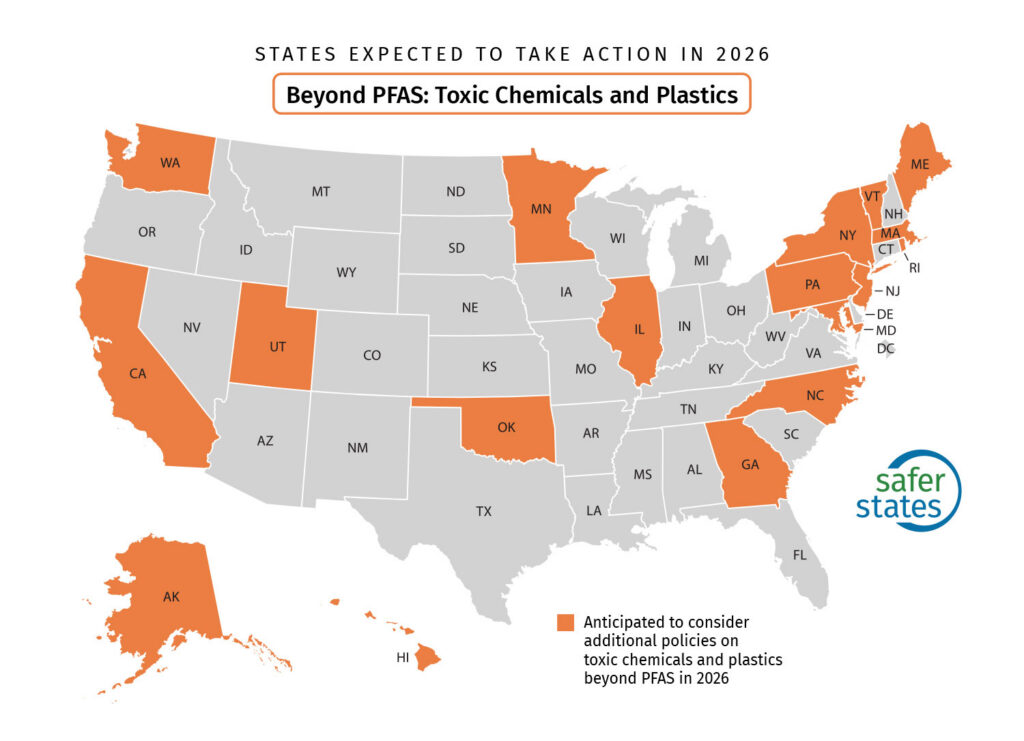
This year, at least 18 states are likely to consider policies to address toxic chemicals and plastics. These states include Alaska, California, Georgia, Hawaii, Illinois, Maryland, Massachusetts, Maine, Minnesota, North Carolina, New Jersey, New York, Oklahoma, Pennsylvania, Rhode Island, Utah, Vermont, and Washington.
Prevention-based policies
States in 2026 legislative sessions will consider policies that protect health from plastics and toxic chemicals by eliminating toxic plastics (including microplastics), plastic additives, and toxic chemicals, particularly in personal care products.
These policies align with actions by major corporations such as Apple, Sephora, and Target, which have removed or set goals to remove harmful chemicals from products and to eliminate PVC and harmful plastic additives like phthalates and bisphenols from their products and/or packaging.
