Introduction: Why state action in 2026 matters
Everyone deserves to live in a world where our health comes first and where the air we breathe, the water we drink, the food we eat, and the products we use are safe. Yet toxic chemicals, including many commonly used in plastics and everyday products, continue to contaminate our homes, workplaces, and neighborhoods, often without our knowledge or consent. Children, workers, and communities living near polluting facilities face the greatest risks.
These harms are not inevitable. They are the result of polluting companies choosing profit over health and exploiting weak rules that allow dangerous chemicals to remain in commerce.
In 2026, states are not just proposing solutions; they are turning years of leadership into action. Across the country, laws adopted in prior legislative sessions are now taking effect, phasing out highly toxic chemicals, increasing transparency, and reshaping how products are made and sold. These policies will deliver real-world protections for families and communities while driving changes in national markets that extend far beyond state borders.
For more than two decades, states have led efforts to protect public health from highly toxic chemicals. Grounded in science, these policies prioritize prevention, protect children and other vulnerable populations, prevent drinking water contamination, and help avoid costly cleanups that burden taxpayers and communities.
What this analysis covers
Safer States has tracked and analyzed state action on toxic chemicals and pollution since 2010. This year, Safer States is not only tracking legislative and regulatory policies under consideration but also examining previously enacted laws that go into effect in 2026.
Together, these provide a forward-looking snapshot of where chemical and plastics policy is headed and how state leadership is shaping real-world impact.
In 2026:
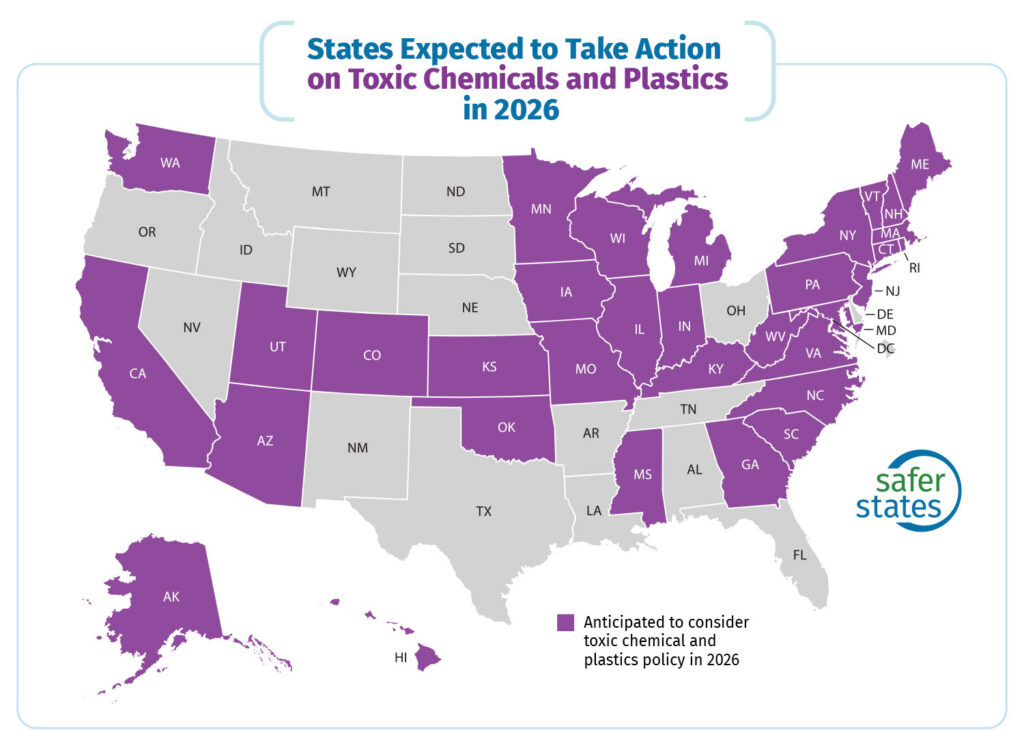
- At least 33 states will consider policies addressing toxic chemicals and plastics.
- At least 275 policies addressing toxic chemicals and plastics will be considered by state legislatures.
- Major focus areas include firefighter protection, reducing PFAS “forever chemicals,” and reducing the use of plastics and other toxic chemicals.
- Fifteen major policies taking effect will provide new public health protections to at least 62 million people in the U.S.
The 33 states anticipated to consider toxic chemical policies in 2026 include: Alaska, Arizona, California, Colorado, Connecticut, Georgia, Hawaii, Illinois, Indiana, Iowa, Kansas, Kentucky, Maine, Maryland, Massachusetts, Michigan, Minnesota, Mississippi, Missouri, New Hampshire, New Jersey, New York, North Carolina, Oklahoma, Pennsylvania, Rhode Island, South Carolina, Utah, Vermont, Virginia, Washington, West Virginia, and Wisconsin.
The essential elements of effective chemical policy
States recognize their responsibility to protect their residents and put health first. State leadership on toxic chemicals and plastics reflects a prevention-based approach that is delivering measurable, real-world results. In 2026, the policies advancing and taking effect across states share four essential elements of effective chemical policy:
- Transparency: Making the invisible visible. Clear, complete information about the chemicals used in products, packaging, and manufacturing—and those released into the air, water, and soil is foundational for protecting health and enabling informed decision making.
- Ban the bad: Drawing clear lines about what doesn’t belong. States are restricting highly toxic chemicals and plastics that pose clear risks to health, including PFAS “forever chemicals”, phthalates, bisphenols, toxic flame retardants, and plastics of high concern.
- Promoting safer solutions. States are supporting the development and adoption of safer alternatives, helping ensure toxic chemicals are not replaced with other toxic substitutes.
- Accountability: Holding polluters responsible. States are advancing policies that require cleanup of contamination, support impacted communities, and enforce protections for drinking water, farmland, and industrial discharges.
Public support
Public support for strong protections from toxic chemicals is overwhelming.
- 92% of Americans believe protecting clean air and drinking water should be a top public health priority (Source: 2025 polling by EDF).
- 86% of all voters oppose efforts to weaken federal environmental protections (Source: 2024 polling by EPN).
In 2026, state policy activity reflects this broad public concern.